
Without Comment
“We are not competent to run our own lives until we realize that we are not competent to run our own lives.” Tim Keller
“Imagine life is a game in which you are juggling five balls. The balls are called work, family, health, friends, and integrity. And you’re keeping all of them in the air. But one day you finally come to understand that work is a rubber ball. If you drop it, it will bounce back. The other four balls…are made of glass. If you drop one of these, it will be irrevocably scuffed, nicked, perhaps even shattered.” Gary Keller
Last Days at Cambridge

I walked to Grantchester for church this AM, stopping first at The Orchard – a famous outdoor gathering for tea. Everybody who’s spent much time at Cambridge in the last 150 years has been to The Orchard – e.g., Bertrand Russell (philosopher), Sir Edmund Mallory (Mt. Everest), Crick and Watson (the double helix) Stephen Hawking, Prince Charles, Salman Rushdie, Virginia Woolf, EM Forster, John Cleese (Monty Python), et al. I hope having a scone with clotted cream doesn’t disqualify me from speaking on gluttony next fall. (Though it probably should. I don’t want to know what clotted cream does to your cholesterol count).
Church was, hmm, I’m not sure what to say. I arrived early, was identified as a guest and introduced to the Vicar. When he found out I was a pastor he asked me to assist with the service. I tried to beg off, claiming very little experience with the Church of England liturgy. He said, “I am extending this invitation in the spirit of ecumenical charity, and besides, I need help.” So, I assisted with communion. And there were 17 of us in attendance. The Vicar is likely in his 70s. That makes him younger than almost everyone there. The Church of England has a problem. (I stuck my head into Little St. Mary’s Evensong. There were six people officiating and five in the congregation.) Ugh.
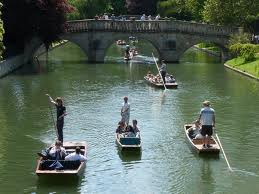
After church I sat and read in the park next to the hotel. It was a gorgeous day. Hundreds were out, “punting” and picnicking. I fly home in the AM.
Study Time in Cambridge, May 2

Last night I attended Evensong at St. John’s College chapel. The sanctuary is amazing, as was the choir, which sang mostly in Latin. This is as high as high church gets.
Tragically there were only about 15 of us in attendance, which is fewer than were in the choir.
Today the weather broke and I was able to run to Grantchester, the next town over. (It’s famous for having the highest per capita of Nobel Prize Laureates in the world). The run follows the Cam River through pastures – complete with cows and sheep. Cambridge students have been talking this path for centuries. Lord Byron swam there. Rupert Brooke wrote a famous poem about it. And Pink Floyd has a song about it. I ran there to get some exercise, but mostly to visit the Parish Church of St Andrew and St Mary. The church dates back to the to 1,100 with parts of the current building dating back to the 14th century. (They have a register on the wall that lists every pastor from 1294 up through the present.)
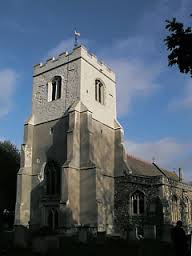
The last time I was here I walked through the cemetery that surrounds it. And was quite taken by the fact that I had to look for a long time to find someone who lived to be fifty. The chapel still stands, though it’s under renovation.
I plan to walk there for services this Sunday.
In talking to Sheri I realized that my time in Cambridge has not been as spiritually vital as it was two years ago. I suspect that is largely attributable to the subject matter. Two years ago I was focused on Christ. This time it’s been pride, greed, envy, lust, wrath, gluttony and sloth. Not quite as inspiring.
C.S. Lewis
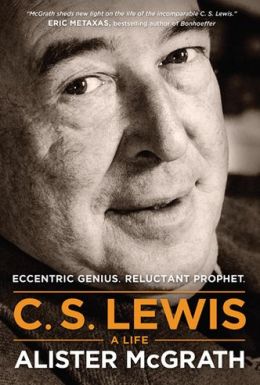 Alister McGrath, who has two Oxford PhDs – one in molecular biophysics and the other in theology – and who has written, debated, lead, etc. at the highest levels – has two new books out on C.S. Lewis. One is on Lewis’s intellectual thought and the other is on his life. I attended a lecture McGrath gave tonight at a local bookstore. There were about 30 of us there. He spoke mostly from a biography, C.S. Lewis – A Life: Eccentric Genius & Reluctant Prophet. Here is a brief summary, following the format McGrath used in the lecture: he asked himself questions and then answered them. (Note: I am condensing down 60 minutes of material into a quick read).
Why another bio on C.S. Lewis? Because it’s the 50th anniversary of his death, there is a surprising amount of stuff we still do not know, and because the recent release (2006) of all of Lewis’s correspondence made it possible for me to learn some new things.
Why should you write a biography? I did not know Lewis personally, but I am in a unique position to understand him. We both were born in Belfast (Northern Ireland), attended Oxford as outsiders, showed up as atheists, came to faith while at Oxford and ended up joining the faculty.
What did you learn that is new? Several things. First, I argue that in Surprised by Joy, Lewis reports the date of his conversion wrong. Second, I believe we now have a greater understanding of how his relationship with Tolkien deteriorated. 3) I learned that he nominated Tolkien for a Pulitzer Prize in Literature, and finally, I learned how hard some periods of his life were – World War I, the years he was caring for Mrs. Moore and his alcoholic brother, etc.
Why did Lewis become a Christian? It wasn’t that there was 65 arguments for believing in God. It was that Christianity provided a visual way of seeing things. Lewis saw things. He didn’t hear them. He saw them in his mind, consequently he was always after a better lens through which to understand the world. He came to the conclusion that the Christian faith was that lens – it made the best sense of rational life and imagination.
Why are we still reading Lewis 50 years after his death? Lewis believed he would be forgotten five years after his death. In the 1960s – 1970s it looked like he was right. Then he bounced back. We are not entirely sure why. The bounce mainly happened in the US, where he is taken much more seriously than in England. It happened primarily because of American evangelicals but also among American Catholics. It’s odd that RC gravitate to Lewis b/c he was an Ulster Protestant, who carried a bit of that edge with him up until close to the end. But his friendship with Tolkien and his strong endorsement of G.K. Chesterton paved the way for RC interest. It made him safe.
Closing Thoughts: 1) Lewis was not a saint. He was a flawed and fallen human being, just like we all are. 2) He said some important things, but one of the key things is that he said them so well. (His early – and failed – efforts to become a poet left him with a great sense of cadence and very colorful prose.) 3) In Mere Christianity he presents the tri-lemma in a much edited – and weaker – way than he does in the original broadcast; 4) When you start pressing Lewis – as serious scholars are now starting to do – you find that there is a lot more there than most people realized; 5) Lewis is one of the very few apologists who appeals to both modernists (rational) and postmodern readers. No other apologist does this as well.
Study Time in Cambridge, April 28, 2013
April 28, 2013
Cambridge
I attended the 9:30 Holy Communion service at a church – to go unnamed – in the heart of town this morning. It is not the oldest church in Cambridge – the Round Church (or Church of the Holy Sepulcher as it is officially known) that was built in 1130 by people returning from the Crusades, and St Bene’t’s church was built by the Saxons one hundred years before that. But it goes way back, has been linked to the University Church for some time and has been the site of many prominent events – i.e., Luther’s books were burned outside it’s door in 1521, Oliver Cromwell burned a copy of the Book of Common Prayer, etc. etc.
Today it is in a state of major renovation – in fact, we met amidst scaffolding. Full, the sanctuary probably holds north of 500. There were maybe 150 of us. And I’d guess that 50 percent of the group was in their eighties. The service itself was moving. There was lots of Scripture, a meaningful time of confession, and wonderful times of prayer and communion. The sermon was something of a different order. In fairness to the preacher, he started the message by explaining that this was the date of their annual meeting, so perhaps this was a unique message. But still…
The pastor began by noting that the church (again, I am leaving the name out) was “quite involved” in the previous Reformation. He then went on to suggest that it’s unique place in the center of Cambridge – which he noted was recently recognized as the second most influential university in the world (behind MIT) – gave it a unique spot from which to view the trends. And then he wondered whether or not we might be a the midst of a new reformation.
The backdrop to this was a recognition that: 1) even though one-third of Britain’s population identifies as members of the Church of England, only 13% attend services, and 2) in the last twenty years almost no new churches have been built.
He wondered whether what we are seeing is “not the decline of the church but a period of change.” From that point on he spoke about how the 87 percent of Anglicans who do not attend worship services actually worship, and how the church can and should serve them. He acknowledged that “believing without belonging” doesn’t work, but suggested that the 87 percent belonged in other ways. What those “other ways” are, was not entirely clear to me, though he spent a fair bit of time talking about Michael’s House, which I believe provides meals and some other programming.
For the record, he did not mention Christ once. His message was such a contrast to the rich liturgy and Scripture readings. Perhaps I’ve given sermons where Christ’s name has not come up. I may have even used a sermon to justify bad results. Maybe I’m being too hard on this guy. But, wow… it was all a bit painful.
Study Time in Cambridge, April 27, 2013
April 27, 2013
I arrived at Cambridge University yesterday afternoon, was assigned a desk at Tyndale Theological Library and jumped right into my research on The Seven Deadly Sins (the series for this fall).
Where to start? This morning, while walking across campus, I nearly collided with Lord Rowan Williams, who, until two months ago was the Archbishop of Canterbury. He recently accepted the presidency of Magdalene College (one of the schools that make up Cambridge) and was pushing a shopping cart across campus to raise money for the local food bank. We chatted for a few minutes about his new job, his upcoming writing projects, etc.
Tonight I’m grabbing dinner at The Eagle and Child, the famous pub where – in February of ‘53 – Francis Crick interrupted his fellow patrons to announce that he and James Watson had”discovered the secret of life” (the double helix structure of DNA.) This Eagle and Child is not to be confused with “the Eagle and Child” – also known as “the Bird and the Baby” – where CS Lewis and JRR Tolkien met to discuss /critique each other’s writing projects – e.g., The Chronicles of Narnia, The Lord of the Rings, ScrewTape Letters, etc.. That Eagle and Child is at Oxford. But, Lewis ended up at Magdalene College at Cambridge, and I’ll be attending a lecture on Lewis by Alister McGrath on Tuesday.
My nine days here will go by way too fast. And I will likely leave here knowing more about Envy – one of the seven deadly sins – than I care to.
Updates from Istanbul, April 25, 2013
April 22 – 25, 2013
Istanbul, Turkey
Greetings from the thriving city of Istanbul – home of 16 million people and more history than I previously appreciated. It’s been a fun few days. I left church on Sunday and – thanks to a Lufthansa ground strike in Germany – skipped slowly across Europe until I eventually landed in the 3,000 year old port city of Izmir. Why Izmir? Well, it’s the birthplace of Homer, the third largest city in Turkey (pop. 4M), a beautiful coastal town on the Aegean Sea and probably a few other things. But the reason I’m here is because Izmir is the new name of the biblical town of Smyrna – which is one of the Seven Churches mentioned in the Book of Revelation. I’m here doing some advance work on a possible church trip that visits some of the seven churches, retraces part of Paul’s steps and weaves in some of the most important moments of church history.
If you are surprised that Turkey is a place of great biblical significance you’re not alone. It goes unappreciated because Turkey is not called “Turkey” in the Bible, it’s called “Asia Minor.” But, trust me, a lot happens here. This is where Paul was born (Tarsus) and where several key biblical cities (e.g., Galatia, Ephesus, Philadelphia, et al) are located. And it remains important for the early church – by way of note, all seven of the first church councils (Nicene, Athanasian, Chalcedonian) were held here. (Istanbul used to be called Constantinople).
I’ve not been to Turkey before so my learning curve is steep. The people have been very welcoming, the coffee very strong and the weather quite cooperative. Here are a few highlights:
Pergamum: On the first day we visited Bergama – the modern day site of Pergamum.
- Two thousand years ago it held the second largest library in the world and one of the most famous hospitals. In fact, it’s because of Pergamum that the American Medical Association has snakes in their logo. (Have you ever wondered about that? Why in the world would pharmacists and doctors have logos with snakes? Well, it started here.)
- When Jesus addressed the Church in Pergamum (Revelation 2) he talked about it having “Satan’s throne.” We are not 100 percent sure what that means, but we saw lots of temples to emperors (Trajan) and the like.
- There were several large outdoor theaters built here – including one at the hospital. They are spectacular but not exactly up to code.
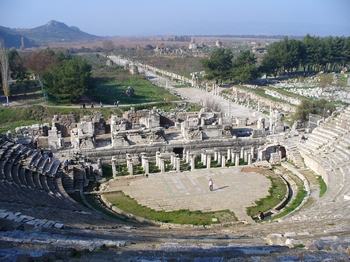
Ephesus: Wow! Over the last 100 plus years they have unearthed about 30 percent of the ancient Ephesus. I was unprepared for how much they have found and reconstructed. It includes another library – the third most famous in the ancient world but one of the most spectacular set of ruins in the world today. It also includes a stadium where Paul likely preached – or at least tried before the riot broke out that got him run out of town. (A few years ago they started holding concerts here again after a gap of hundreds (a thousand plus?) years. Ray Charles was the first. Elton John played here a couple years ago. Our guide said that he attended a concert a few years ago with 17,000 people and part of it was unamplified because the acoustics are perfect.
I visited a carpet store that employs 1,500 women (no men) in hand weaving silk and wool carpets, toured the famous Blue Mosque, walked through several museums and a palace, and in addition to having some great Kebabs, I’ve eaten at The Pudding Shop made famous by Bill Clinton’s visit during his presidency.
By way of parting comments let me say that:
- The economy here is growing. Turkey – the “next China” – seems to be building everywhere. Both Istanbul and Izmir are getting new airports. Tourism is climbing by 1M per year.
- The current government is moving in a more Islamic direction. This place is much freer than other Islamic countries I’ve visited, but – depending on whom you listen to – that appears to be changing.
Well, I’ve kept you long enough. We are heading out for a bite to eat and then to bed, though my guide has warned me that if a certain soccer team wins this evenings game against a Belgium team, “no one will sleep in Istanbul tonight.” I’m guessing that includes jet-lagged pastors from Chicago.
A Few Thoughts About Sin
I’ve started reading up on sin – not that I’m not already an expert – in preparation for Seven, next fall’s series on the seven deadly sins. Here are a couple quotes worth passing along right away. The first is from Clive Staples (C.S. Lewis) himself.
I remember Christian teachers telling me long ago that I must hate a bad man’s actions, but not hate the bad man: or, as they would say, hate the sin but not the sinner. For a long time I used to think this is a silly, straw-splitting distinction: how could you hate what a man did and not hate the man? But years later it occurred to me that there was one man to whom I had been doing this all my life – namely myself. However much I might dislike my own cowardice or conceit or greed, I went on loving myself. There had never been the slightest difficulty about it. In fact the very reason why I hated the things was that I loved the man. Just because I loved myself, I was sorry to find that I was the sort of man who did those things . Consequently, Christianity does not want us to reduce by one atom the hatred we feel for cruelty and treachery. We ought to hate them. Not one word of what we have said about them needs to be unsaid. But it does want us to hate them in the same way in which we hate things in ourselves: being sorry that the man should have done such things, and hoping, if it is any way possible, that somehow, sometime, somewhere, he can be cured and made human again.
The second is a satirical look at our shallow view of sin. It’s a modification of a traditional, public confession of sin, such as those found in the Book of Common Prayer. (It was written by David Head back in 1959).
Benevolent and easy-going Parent: We have occasionally had some minor errors of judgment, but they’re not really our fault. Due to forces beyond our control, we have sometimes failed to act in accordance with our own best interests. Under the circumstances, we did the best we could. We are glad to say that we’re doing okay, perhaps even slightly above average. Be your own sweet Self with those who know they are not perfect. Grant us that we may continue to live a harmless and happy life and keep our self-respect. And we ask all these things according to the unlimited tolerances which we have a right to expect from you. Amen.
Of Possible Interest
In the April 15, 2013 edition of Time magazine, they feature a report entitled, “The Latino Reformation.” It notes how quickly the evangelical church is growing among Hispanics in this country. The hands on the cover of the magazine and a full page picture on page 20 are of Wilfredo de Jesus, the pastor of New Life Church in Chicago. Wilfredo preached at Christ Church two years ago on a pulpit exchange.
Too Committed?
Christianity Today recently carried a story by Matthew Lee Anderson on David Platt, Francis Chan, Shane Claiborne and Kyle Idleman, entitled Here Come the Radicals. I finally got around to reading it, and found the piece helpful in articulating a concern I have.
I’ve read some of all four of these writers and believe their critique of American culture, comfortable Christianity, etc. – is very needed. They also make me just a bit nervous. I think there is a real risk for young leaders (and all four of these guys are young) to push discipleship in a direction that gets mean. We need their prophetic voice – and so I have recommended their books – but we cannot drink the Kool Aide without diluting it.
I’ve always struggled to articulate my concerns on this point. (I’d like to think that’s because I’m much better at calling people to be more dedicated to Christ not “less.) But my sense is that the call to be “sold out” can get a bit mean. Rather than growing in the grace of Christ people can slip into an ascetic legalism. In certain situations their faith becomes competitive.
Steve Hayner told me one of the hardest jobs he faced as president of IVCF was keeping it from being “too radical.” That made sense to me a few days later when I met a student at Trinity College who was calling the entire campus to a 40 day fast. What could possibly be wrong with a forty day fast? Hey, Jesus did it, right? This young man had an infectious zeal for Christ that I loved and wanted to affirm. But… is it a good idea for a 110 pound, 18 year old freshman girl to go on a 40 day fast? Should we really tell a 20 year old – who is taking 20 credits and working 15 hours a week – that if they really love Jesus he needs to attend a daily 4 a.m. prayer mtg? Is it wise to tell these same students that they should give next semester’s tuition payment to the poor?
These are not rhetorical questions. We are way too soft. We need more radical commitment. But…
Anderson catches the edge to the stuff these guys are writing that can push people in the wrong direction. We need their voice, but we also need to be wise and gracious in the way it is understood and applied.